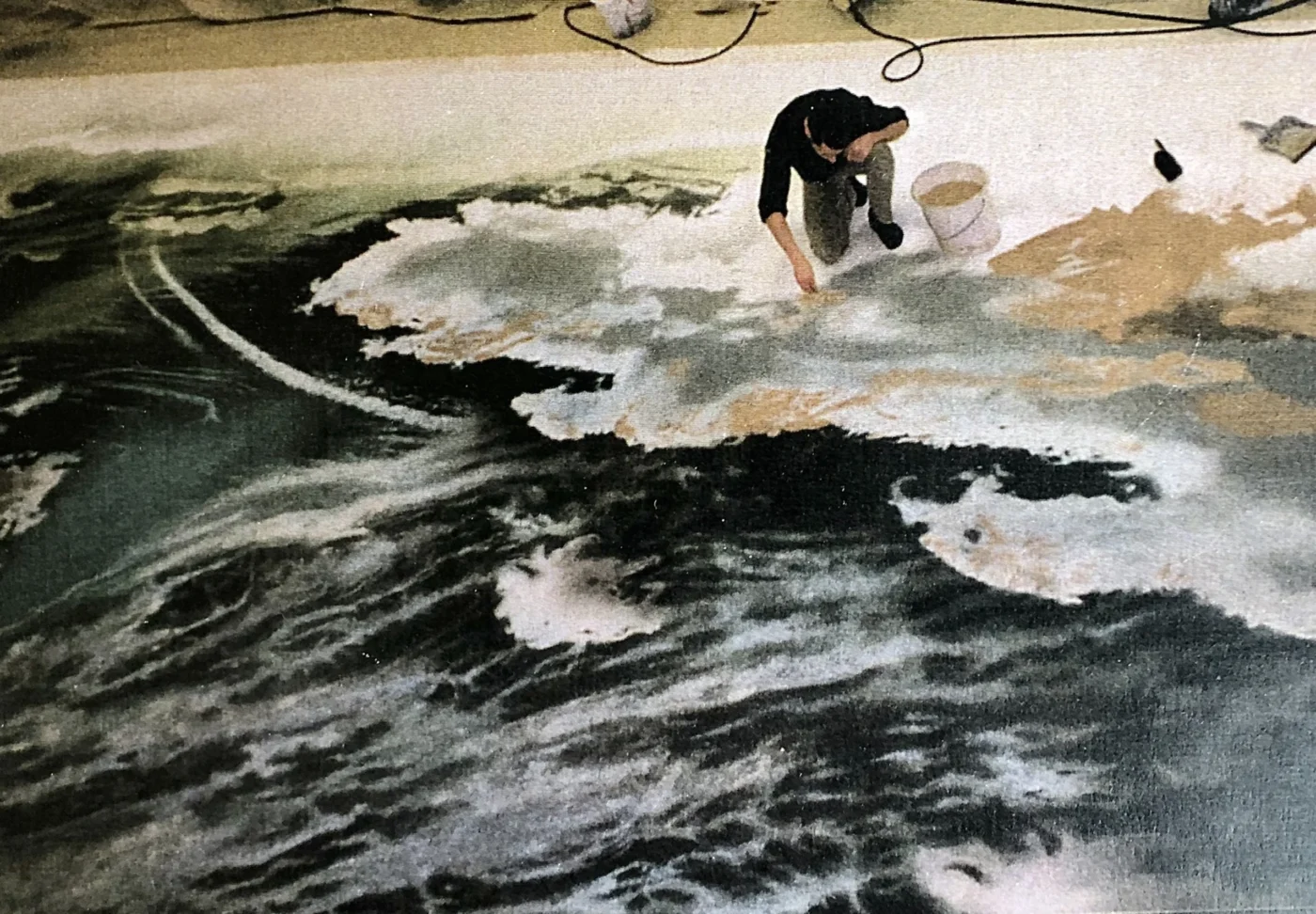
Cloud Painting, Between Pixel Structure and Photorealism
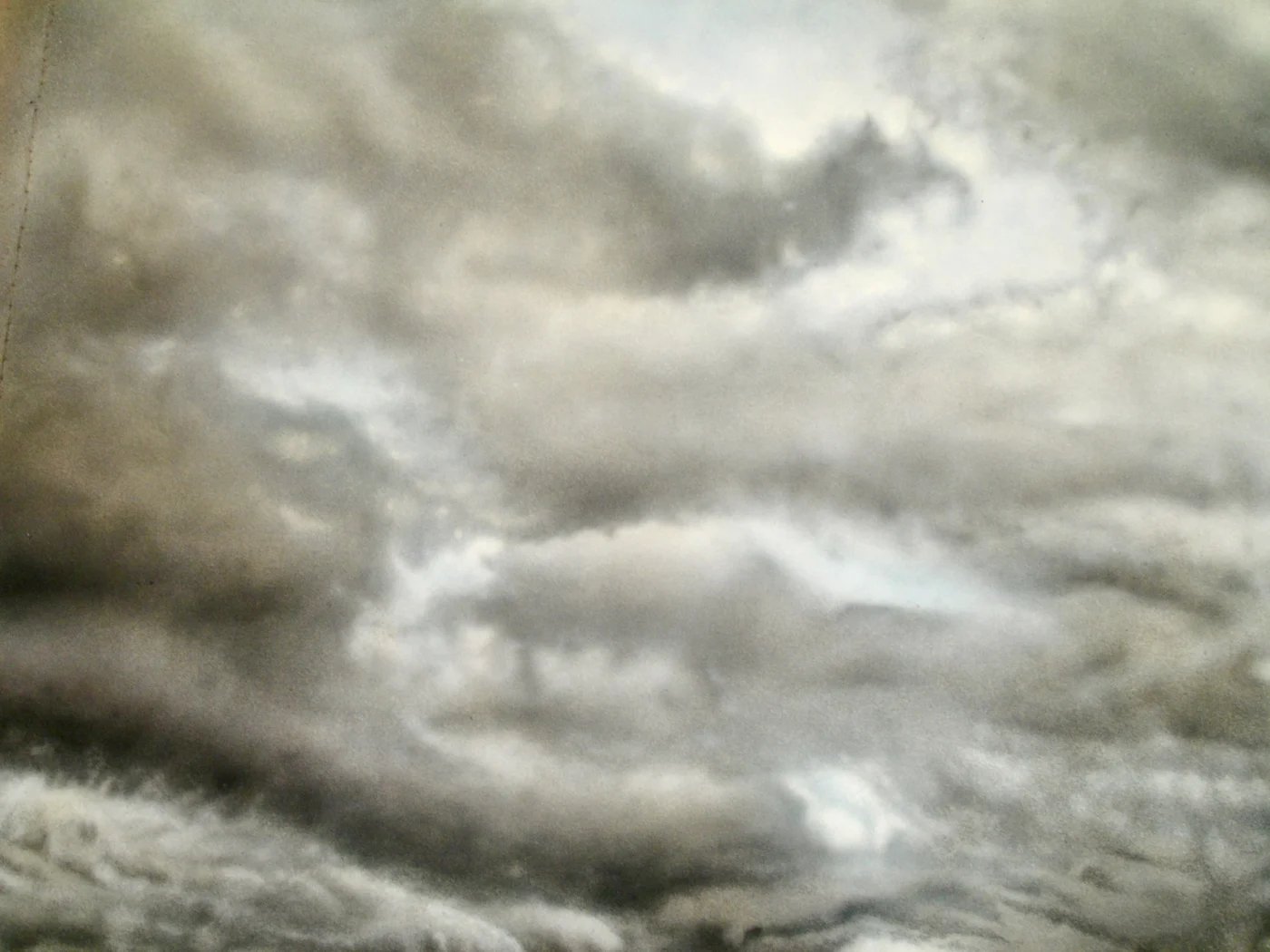
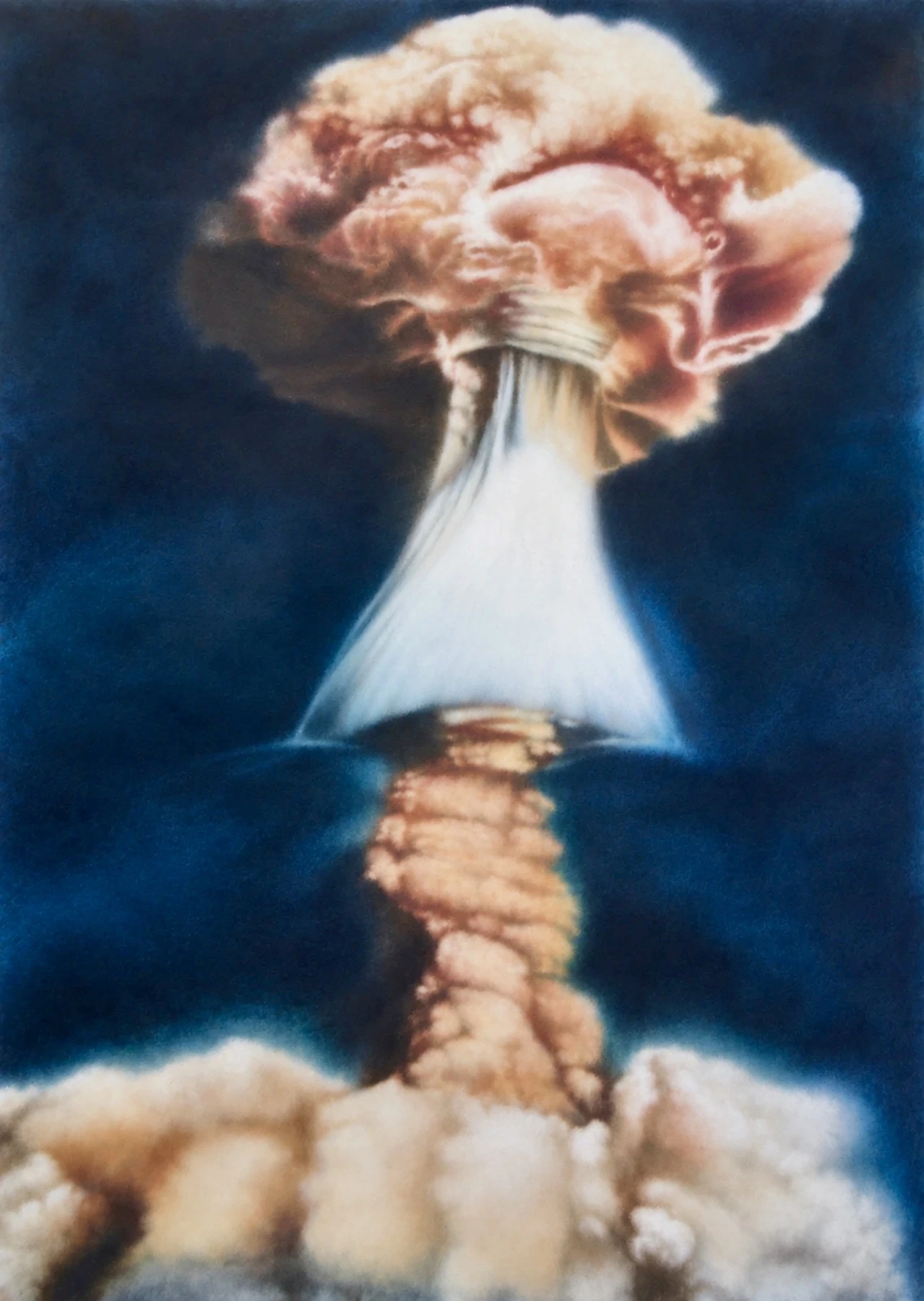
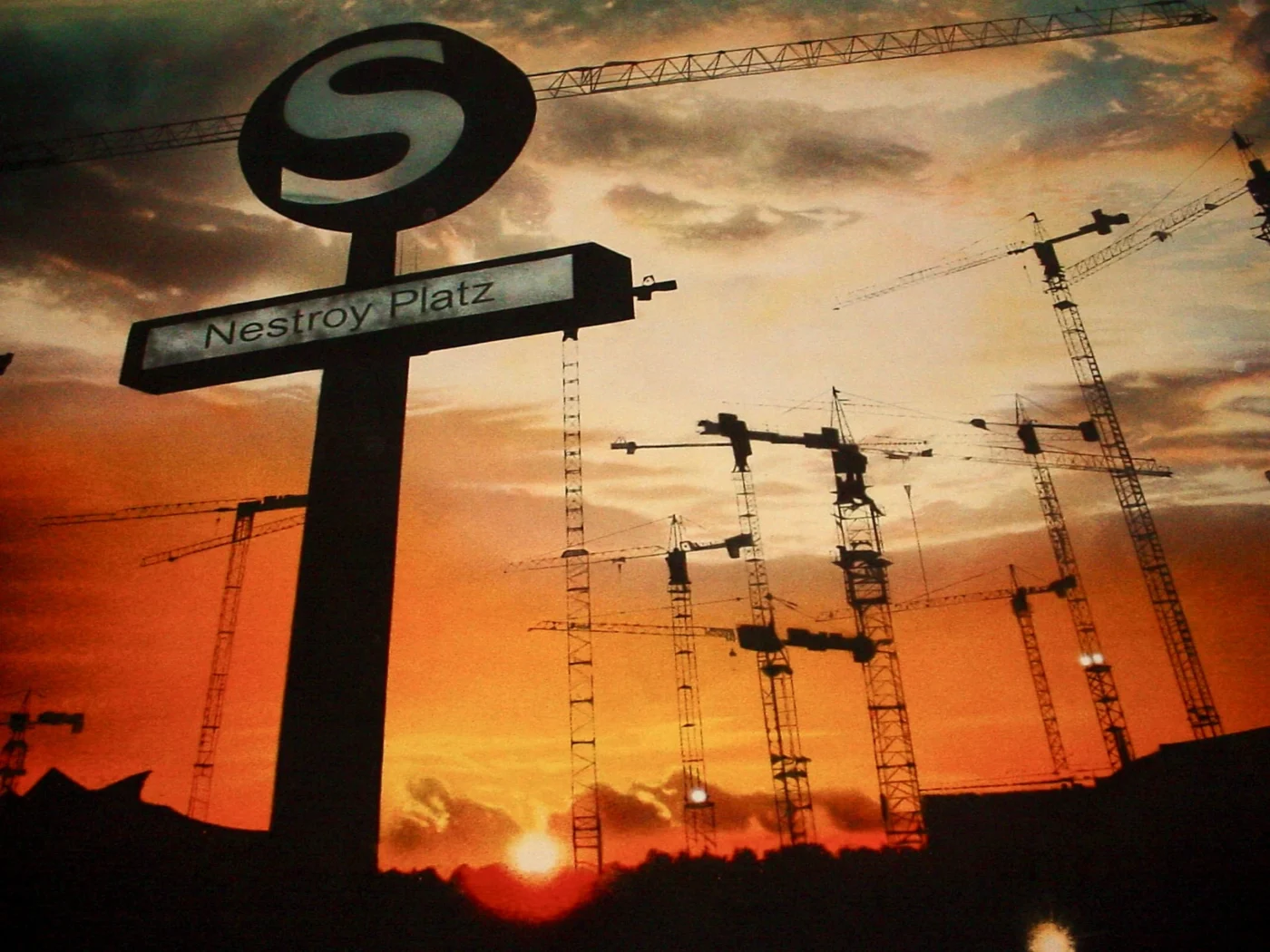
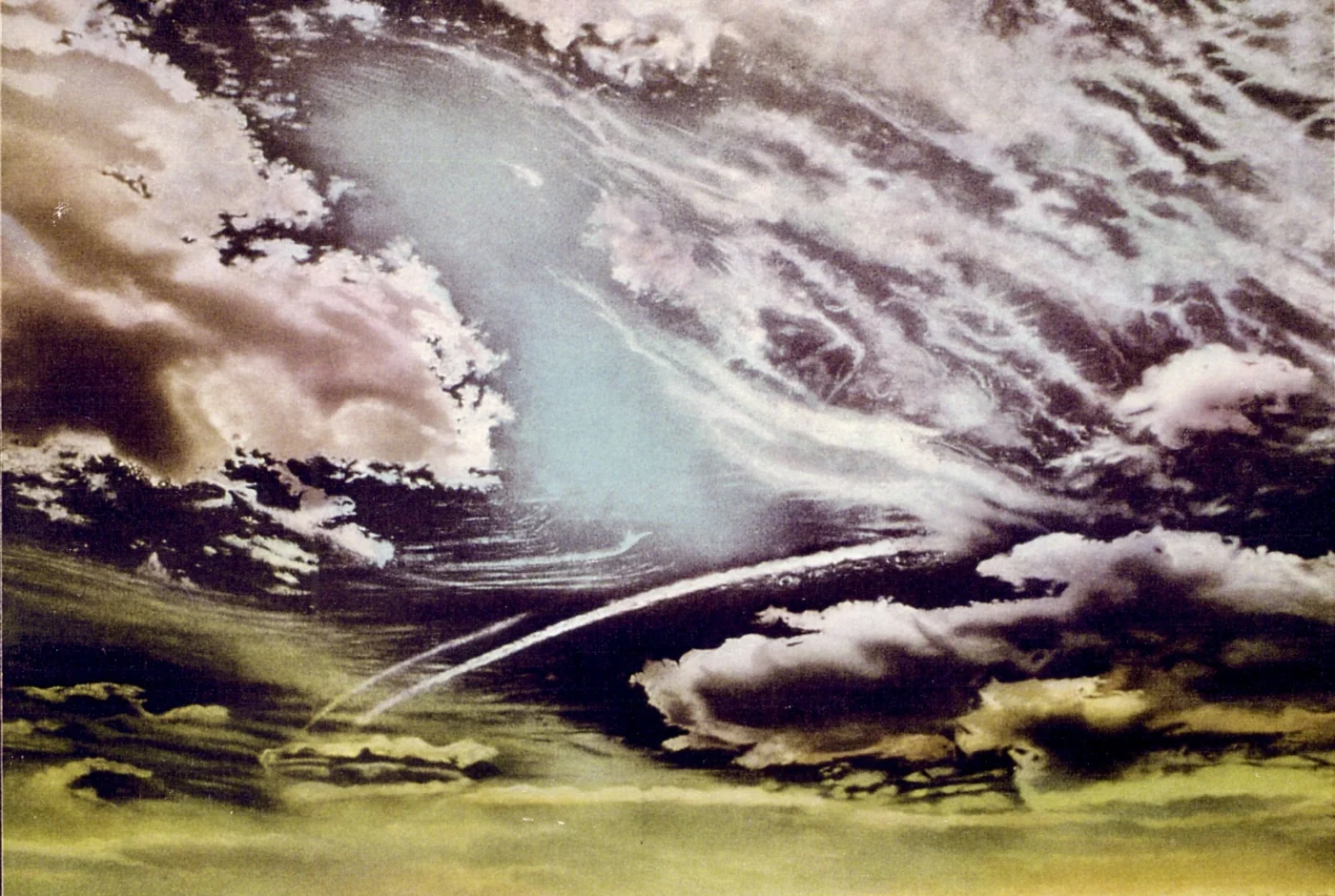
What looks like a photograph at first glance is actually large-scale scenic painting. Cloud formations, atmospheric lighting and spatial depth are created using a specialised technique that allows for subtle tonal variations and almost seamless transitions: the scatter technique. Sawdust or cork granules of varying sizes are used as masking materials. The grain size determines the scale of the individual colour particles and, consequently, the resolution of the desired pixel-like structure. The process is based on a simple principle: granules are carefully scattered across the surface, acting as thousands of tiny, movable stencils. Paint is then applied using a spray gun. By repeatedly scattering, spraying and brushing away the granules, shapes, contrasts and delicate tonal gradations are gradually built up, layer by layer. This technique is particularly effective for photorealistic cloud formations. Where visible brushstrokes might interfere with soft, diffused transitions, the scatter technique creates smooth gradients without a recognisable brush texture. Viewed up close, the granular, pixel-like structure remains visible; from a distance, the individual colour particles merge into an almost photographic image. The technique also offers particular advantages when working on transparent fabrics such as theatrical tulle or scrim. The open weave remains largely intact, allowing the painted scenery to be backlit and transformed through different lighting effects on stage. The scatter technique expands the creative possibilities of spray painting. The granules serve as a versatile painting aid, allowing even complex cloud formations to be rendered with precise control over soft transitions, contrast and spatial depth. Client: City of Schwäbisch Gmünd
Auftraggeber: Stadt Schwäbisch Gmünd